 Designed and Manufactured in the UK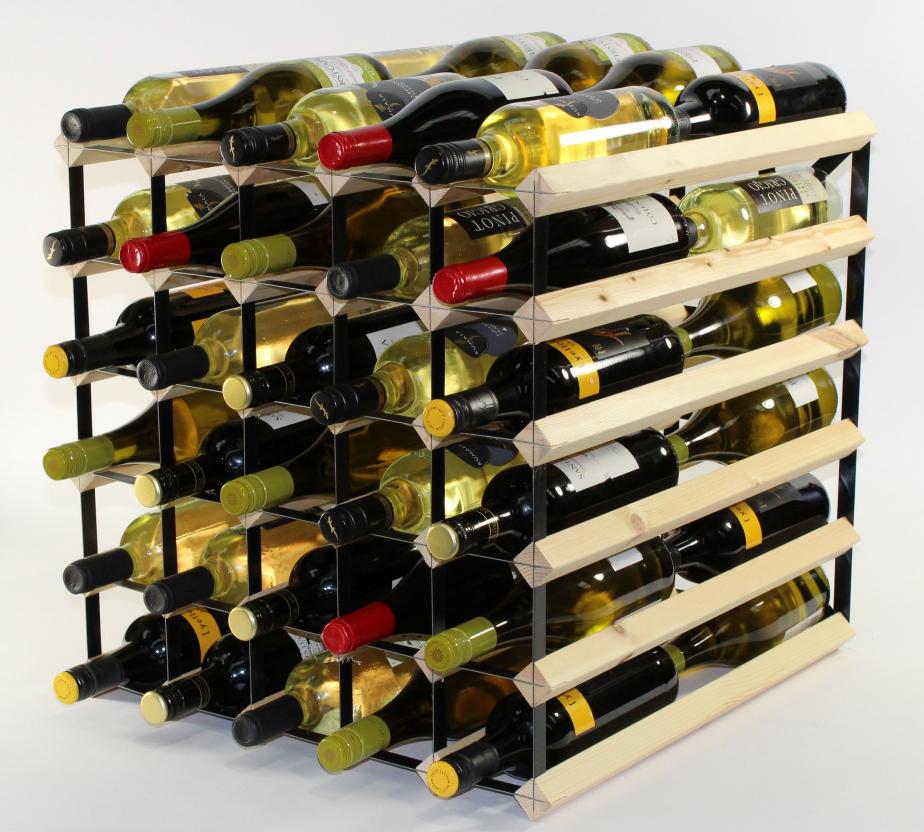
A wine rack can look right and still be wrong for the way you buy, store and serve wine. The choice between single versus double depth racks affects far more than capacity. It determines how much floor space the storage uses, how easily you can reach a particular bottle, and whether the system will still suit your collection a few years from now.
For a compact kitchen, dining room alcove or under-stairs project, every centimetre matters. For a restaurant, wine bar or merchant, capacity and stock rotation can carry more weight. The best option is not automatically the rack that holds the most bottles. It is the one that gives you usable storage in the space available.
Single versus double depth racks: the practical difference
A single-depth wine rack stores one bottle deep. Each bottle has its own position at the front of the rack, making labels easier to see and bottles quicker to remove. This format keeps the storage depth relatively shallow and works well where bottles need to remain visible and readily accessible.
A double-depth rack stores two bottles front to back in each row. The rear bottle sits behind the front bottle, allowing considerably more capacity within the same width and height. The trade-off is access: to remove a bottle at the back, you will usually need to take out the bottle in front first.
Neither format is inherently better. Single depth prioritises selection and display, while double depth prioritises capacity and efficient use of wall space. The right decision comes down to the room, the size of the collection and how often particular bottles are opened.
When a single-depth wine rack is the better choice
Single-depth racks are often the practical choice in rooms where circulation space is limited. A narrow rack along a dining-room wall, in a kitchen utility area or beside a cellar door keeps bottles organised without projecting too far into the room. It can also be easier to incorporate into a fitted scheme with cupboards, shelves or a worktop above.
This format is particularly useful for collections that are opened regularly. If you like to choose wine by producer, vintage or grape variety, seeing every bottle makes the process quicker. It also avoids repeatedly moving bottles to reach stock at the rear, which is useful where bottles have been stored for ageing and you want to minimise disturbance.
Single-depth storage suits display-led settings too. Restaurants and bars may use it behind a counter or along a feature wall where labels and bottle profiles contribute to the presentation. At home, it creates a neat, intentional finish in a kitchen renovation or entertaining area without making the room feel dominated by storage.
The limitation is straightforward: capacity increases by adding height or width, rather than by using the depth of the rack. In a small footprint, a single-depth system may therefore hold fewer bottles than you would like. A tall arrangement can solve this, but it must be safely fixed and remain easy to reach.
Good uses for single depth
Choose single depth where bottle-by-bottle access matters, where the rack sits in a walkway, or where the wine storage is intended to be part of the room’s visual finish. It is also a sensible choice for smaller collections, mixed bottle sizes and everyday drinking wines.
Where double-depth racks make better use of space
Double-depth racks come into their own when wall width is limited but there is sufficient room for a deeper unit. By storing bottles two deep, they can almost double capacity without doubling the frontage required. This makes a substantial difference in under-stairs spaces, cellar walls, store rooms and commercial stock areas.
For example, a homeowner with a growing collection may have only one suitable wall in a cellar or garage conversion. A double-depth configuration can provide useful reserves without turning the entire room into wine storage. It also works well beneath stairs, provided there is enough depth and the sloping ceiling is properly accounted for in the design.
Commercial buyers often favour double depth for back-of-house storage. A restaurant can keep larger quantities of dependable house wines or repeat lines close to service, while using a single-depth display for bottles guests need to view and select. Wine merchants can also use the format for reserve stock where capacity is more valuable than instant label visibility.
Double depth is not only for large collections. It can make a modest area work harder. The question is whether the extra depth will interfere with doors, walking routes, furniture or access to other storage. Measure the full projection from the wall, not just the width and height of the available gap.
Plan for front and rear bottle access
The main consideration with a double-depth rack is stock management. If bottles are stored without a plan, the wines you want may end up behind wines you do not. Grouping by style, drinking window or case purchase makes the arrangement more convenient.
Many collectors place longer-term bottles at the rear and earlier-drinking wines at the front. For hospitality use, keeping the same wine or vintage in a two-bottle-deep row can make replenishment simpler. If you regularly need every individual bottle at a glance, single depth is likely to be the better fit.
Capacity is more than a bottle count
Wine rack capacities are normally based on standard 750ml Bordeaux-style bottles. These are a helpful benchmark, but they are not a guarantee that every bottle in your collection will fit in every position. Champagne, Burgundy, Rhône, sparkling wine and some New World bottles can have broader diameters. Magnum bottles require their own allowance.
Before choosing a depth, look at the bottles you actually buy. A collection built around standard claret bottles can make very efficient use of a double-depth rack. A collection with many wider bottles may need more room between positions or a combination of racks and wine cubes.
It is worth allowing spare capacity rather than buying precisely for the number of bottles you own this month. A rack at full capacity is difficult to reorganise, and it gives you no practical place for new purchases. Planning for growth is especially sensible if you buy mixed cases, take advantage of seasonal offers or are building a cellar for longer-term drinking.
Consider the room as well as the rack
The depth decision should follow a proper assessment of the space. Measure walls, alcoves, door swings, radiators, skirting boards, electrical points and the clear route needed to remove bottles. In an under-stairs installation, take measurements at several heights rather than assuming the void is square.
Temperature and light matter as well. Wine is best kept in a consistently cool area away from direct sunlight and significant heat sources. A rack in a kitchen may be ideal for wines that will be enjoyed soon, while bottles intended for ageing may be better stored in a cooler cellar, pantry or temperature-controlled wine room.
For freestanding units, ensure the floor is level and capable of supporting the loaded weight. Wine is heavy. Wall-mounted and taller systems should be fixed securely to a suitable wall using the correct fixings. A well-made rack provides the structure, but safe installation is what protects the bottles, the room and the people using it.
A combined layout often gives the best result
It does not have to be a choice of one format throughout. Combining single and double depth can produce a more useful wine room than either option alone. Place everyday and display bottles in shallow, visible racks. Use double-depth sections for reserves, unopened cases or wines being held for a special occasion.
Wine cubes can add flexible bulk storage for awkward corners or larger formats, while drawers and shelves provide a home for openers, decanters, glassware and records. This approach is particularly effective in bespoke projects, where the space may include sloping ceilings, chimneys, uneven alcoves or restricted access.
For homes and businesses with defined dimensions or a required bottle capacity, made-to-measure storage avoids the compromises of forcing standard furniture into an unsuitable gap. Cranville Wine Racks manufactures in the UK using Grade A Scandinavian pine and commercial-gauge Welsh steel, allowing a storage layout to be planned around the room rather than the other way round.
Choosing with confidence
Choose single depth if easy selection, a slim profile and a display-ready finish are the priority. Choose double depth if you need to increase capacity on a limited wall area and can organise bottles in front-and-rear positions. If your collection includes both everyday bottles and longer-term stock, a combination is usually the most practical answer.
Start with the bottles you own, the room you have and the way you expect the collection to grow. A wine rack should make opening a bottle easier today while leaving enough room for the cases, celebrations and good vintages still to come.